How to Layer Necklaces Without Tangling
Layered necklaces can make simple jewellery feel personal, but chains that twist together or pendants that overlap quickly spoil the effect. Tangling cannot always be prevented completely because movement, clothing and chain construction all play a part. The right combination, however, can make it much less likely.
Start with clear length differences
Give each necklace its own line. A gap of around 5 cm is a useful starting point for fine chains, with more space when pendants are large. If two necklaces are almost identical in length, their clasps and pendants are more likely to meet.
Use a close chain or choker as the first layer, a collarbone-length design second and a longer pendant third. Our necklace length guide explains where common measurements usually sit.
Mix chain weights thoughtfully
Two very fine chains of similar weight can cling and twist together. Combining slightly different textures or weights often creates clearer separation. A fine cable chain may sit well above a more substantial Figaro profile, for example.
The Solene Figaro Chain Necklace can act as a structured layer beside a finer pendant because its link pattern creates a distinct visual line.
Choose one focal point
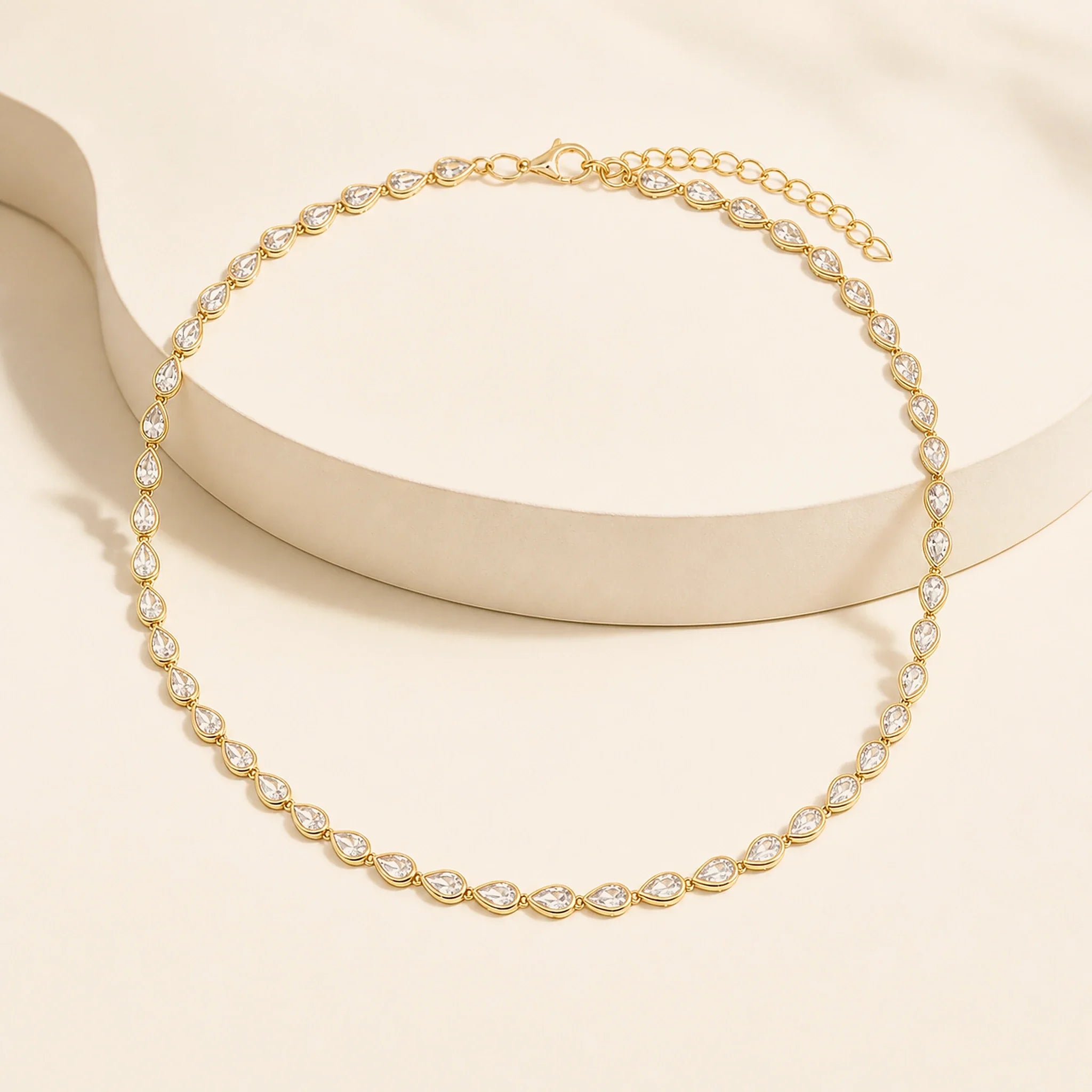
If every necklace has a large pendant, the layers compete for the same central space. Let one piece lead and use quieter chains around it. A gemstone choker can be the colour focus; a pear-cut pendant can be the vertical focus.
Repeat one element, such as metal tone or stone colour, to connect the layers without making them identical.
Fasten clasps in opposite directions
After putting the necklaces on, position the clasps at slightly different points rather than stacking them directly together at the back of the neck. This can reduce immediate bunching, although natural movement will still shift them over time.
A necklace separator or layering clasp can also keep multiple chains attached at fixed points. Check that any accessory suits the clasp size and does not add more weight than the chains can comfortably support.
Consider your clothing
Textured knits, high collars and loose scarves can move chains into one another. Smooth, open necklines give layers more room to settle. If you are wearing a high neck, consider one longer, stronger chain rather than several fine pieces that may catch on fabric.
Body movement matters too. A necklace combination that stays perfect during dinner may tangle during a long walk. Choose fewer layers for more active days.
How to untangle necklaces safely
Remove the necklaces and place them on a flat, well-lit surface. Open the clasps to release tension. Use your fingers or two blunt pins to loosen the centre of a knot gradually; do not pull the chain ends apart, as this tightens the knot.
If the chain is very fine, plated, stone-set or under tension, stop before it bends and take it to a professional jeweller. Avoid applying oils or powders without checking the material care requirements.
Store layered necklaces separately
Do not leave the finished stack fastened together in a shared pouch. Close each clasp and store chains separately, ideally flat or hanging with the pendant supported. This prevents yesterday's styling from becoming tomorrow's knot.
Read the GOVAVI jewellery care guide for cleaning and storage advice across finishes and materials.
Three balanced layering formulas
Fine and minimal
Pair a short plain chain with a slightly longer small pendant. Keep the metal tone consistent and leave visible space between them.
Texture-led
Use a close gemstone or beaded necklace with a longer smooth chain. Let texture create contrast while the pendant remains simple.
Modern mixed metal
Choose two clean chains in different tones and repeat both colours elsewhere, such as in earrings or a watch. Similar scale keeps the change in colour deliberate.
Quick answers
Do necklace spacers stop all tangles?
They can reduce tangling by fixing the clasps apart, but movement and chain texture still matter.
How many necklaces should you layer?
Two is often enough for a clean everyday look. Three can work when each has a clear length and role.
Can two pendants be layered?
Yes, if their chain lengths and pendant sizes leave enough separation. Place the smaller detail above the larger focal pendant.
Explore the GOVAVI necklace collection by length, texture and focal detail. The best layers look relaxed because every piece has room to be seen.

Leave a comment
This site is protected by hCaptcha and the hCaptcha Privacy Policy and Terms of Service apply.