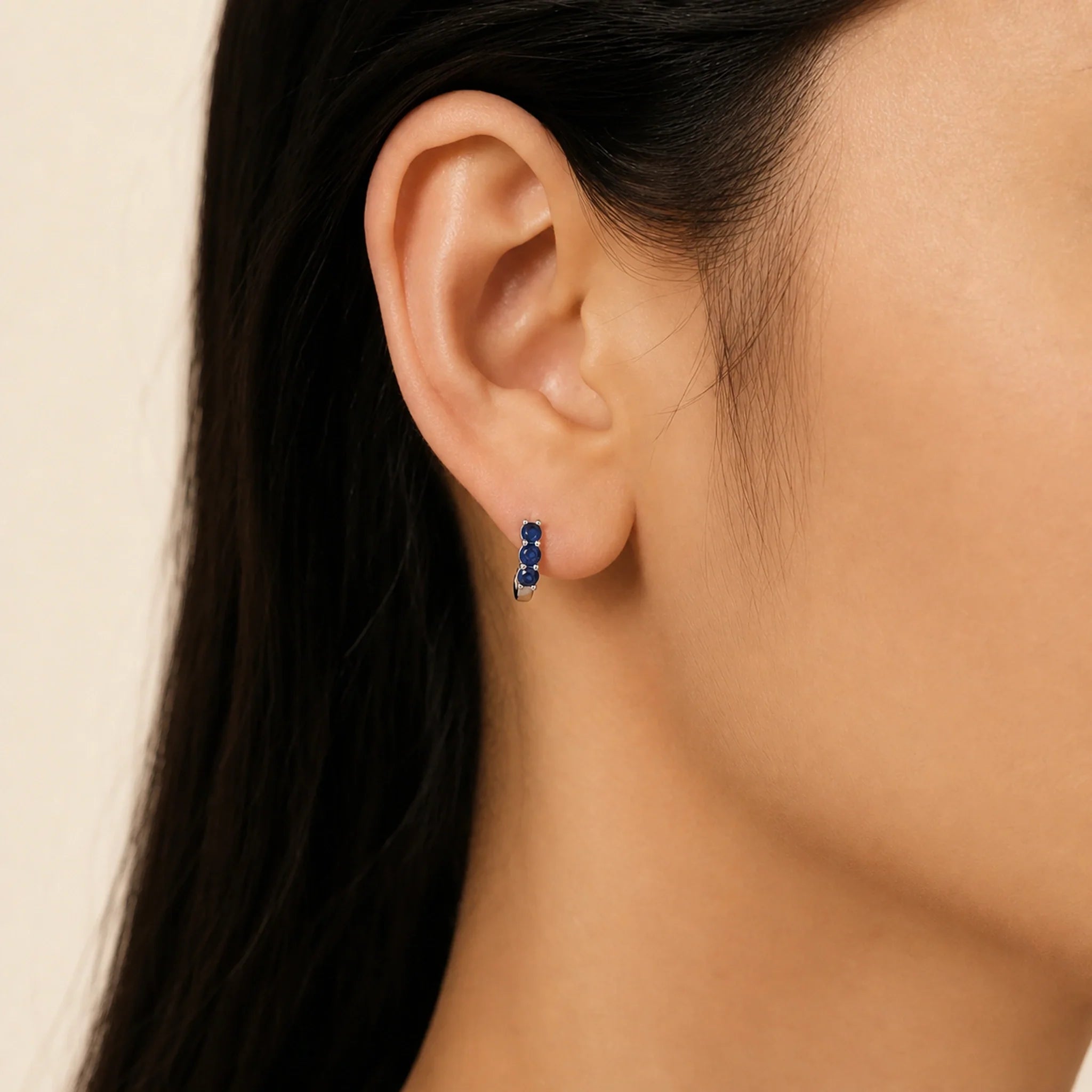
What Is 925 Sterling Silver? A Practical Jewellery Guide
If you have seen a tiny “925” mark on a ring, necklace or pair of earrings, it identifies the piece as sterling silver. In simple terms, 925 sterling silver is made from 92.5% pure silver and 7.5% other metals. That small amount of alloy gives naturally soft silver the strength it needs for jewellery that can be worn regularly.
The number is useful, but it is only one part of choosing a well-made piece. The design, finish, setting and care all influence how jewellery looks and lasts. This guide explains what 925 sterling silver means, how it compares with silver-plated jewellery and what to expect over time.
What does the 925 stamp mean?
Pure silver is sometimes described as 999 silver because it is 99.9% silver. It has a beautiful brightness, but it is too soft for many detailed or everyday jewellery designs. Sterling silver balances purity with practicality: 925 parts out of every 1,000 are silver, while the remaining 75 parts are an alloy, commonly including copper.
A 925 stamp is therefore a fineness mark. It describes the silver content of the metal, not the style, size or surface finish. A gold-tone piece can still have a sterling-silver base if a layer of gold has been applied over it. Always read the individual product details rather than judging the base metal by colour alone.
Is sterling silver the same as silver-plated jewellery?
No. A sterling-silver piece is made from the same 925 silver alloy throughout. Silver-plated jewellery has a thin silver-coloured layer over a different base metal. Both can have a place in a jewellery collection, but they are not interchangeable descriptions.
Knowing the construction helps you choose care methods and understand value. GOVAVI lists material information on each product page, and our materials guide explains the finishes used across the collection.
Does 925 sterling silver tarnish?
Sterling silver can tarnish. This is a normal surface reaction rather than proof that the silver is poor quality. Moisture, sulphur compounds in the air, cosmetics, fragrance and skin chemistry can all affect how quickly the surface darkens.
Tarnish is often removable with gentle, material-appropriate care. A soft silver-polishing cloth can restore brightness to plain sterling silver. If a piece includes pearls, stones or gold plating, use the method recommended for the complete piece rather than treating the silver in isolation.
Can sterling silver be worn every day?
Sterling silver is widely used for everyday jewellery because it is durable enough for fine details while remaining lightweight and refined. Daily wear still exposes jewellery to knocks, moisture and product build-up, so a few habits make a difference:
- Put jewellery on after perfume, lotion and hairspray have dried.
- Remove it before swimming, bathing, exercise and household cleaning.
- Wipe it with a clean, soft cloth after wear.
- Store pieces separately in a dry pouch or lined box.
Our full jewellery care guide covers care for silver, plated finishes, pearls and stones.
How to judge a sterling-silver piece
Start with clear material information. Then look at the details that affect wear: clasp security, earring post and closure, stone setting, chain thickness, dimensions and finish. Product photography should show both the overall design and the details at a useful scale.
For earrings, pay attention to inner diameter as well as outer dimensions. For necklaces, check chain length and any extender. These measurements are often more useful than a product image alone because the same design can sit differently from person to person.
Choosing between silver and gold tone
There is no rule that one tone is more flattering than another. Silver tone gives a cool, clean finish; gold tone adds warmth. Your wardrobe, existing jewellery and personal preference matter more than a rigid skin-tone formula.
If you like both, mixed-metal styling can look intentional when one element repeats elsewhere in the outfit. You can also start with a simple pair from our earrings collection or a versatile chain from our necklaces collection.
Quick answers
Is 925 silver real silver?
Yes. Sterling silver is a recognised silver alloy containing 92.5% silver.
Why is another metal added?
The alloy improves strength and helps the metal hold its shape during normal wear.
Does a 925 stamp guarantee the whole piece is unplated silver?
Not necessarily. A sterling-silver base can carry a gold-tone finish, and individual components may vary. Check the full product specification.
Understanding materials makes it easier to buy jewellery with confidence and care for it properly. Explore new arrivals and use each product page as the final reference for construction, finish and dimensions.

Leave a comment
This site is protected by hCaptcha and the hCaptcha Privacy Policy and Terms of Service apply.